


































AI in Marketing: Revolutionizing Strategies & Costs
Explore how AI is transforming marketing strategies, driving efficiency, and impacting costs. This review covers best use cases, strengths, limitations, and future trends for businesses leveraging AI in marketing.
AI in Marketing: Revolutionizing Strategies & Costs
The landscape of marketing is undergoing a profound transformation, largely driven by the rapid advancements and increasing adoption of artificial intelligence (AI). As businesses look to optimize their outreach, enhance customer engagement, and manage budgets more effectively, AI in Marketing is emerging not just as a trend, but as a fundamental shift in how strategies are conceived and executed. This evolution promises significant impacts on both the effectiveness and the cost associated with marketing efforts.
Recent signals indicate a growing interest in how AI and automation are reshaping various aspects of digital strategy, including the cost of services like SEO. This suggests a broader trend where AI is becoming instrumental in streamlining operations and potentially reducing expenditures across the marketing spectrum.
What Has Changed: The AI-Driven Marketing Shift
Traditionally, marketing campaigns relied heavily on manual execution, extensive market research, and often, broad-stroke targeting. The introduction of AI has fundamentally altered this paradigm. AI-powered tools can now analyze vast datasets at speeds and scales previously unimaginable, uncovering intricate patterns in consumer behavior, market dynamics, and campaign performance. This capability allows for hyper-personalization of messages, predictive analytics to anticipate customer needs, and automated execution of tasks ranging from content creation to ad placement.
Automation in marketing, supercharged by AI, means that repetitive tasks such as email segmentation, social media posting, and performance monitoring can be handled by intelligent systems. This frees up human marketers to focus on strategic thinking, creative development, and building deeper customer relationships. As covered in AI Marketing: A Game-Changer for Businesses, this shift is enabling companies to attract, engage, and retain customers with unprecedented efficiency.
Why Marketers Should Care: Enhanced Performance and Cost Efficiency
The primary driver for adopting AI in marketing is the potential for significant improvements in both performance and cost-effectiveness. By leveraging AI, marketers can achieve higher conversion rates through more targeted and personalized campaigns. Predictive analytics can identify high-value leads, while AI-driven optimization can ensure advertising spend is allocated to the channels and audiences most likely to yield returns. This level of precision can lead to a more efficient use of marketing budgets, reducing waste and improving return on investment (ROI).
Furthermore, the automation of tasks can lead to substantial operational cost savings. Reduced reliance on manual labor for routine activities translates into lower overheads. While initial investment in AI technology and training may be required, the long-term benefits in terms of productivity and cost reduction are compelling. Recent coverage suggests that AI and automation are already changing the cost of SEO, a field that heavily relies on data analysis and optimization, indicating a wider trend of cost transformation across marketing disciplines.
Best Use Cases for AI in Marketing
The application of AI in marketing is diverse and continues to expand. Some of the most impactful use cases include:
- Personalization at Scale: AI algorithms can analyze individual customer data to deliver tailored content, product recommendations, and offers across various touchpoints.
- Predictive Analytics: Forecasting customer behavior, identifying churn risks, and predicting future purchasing trends to inform proactive marketing strategies.
- Content Optimization and Generation: AI can assist in generating marketing copy, optimizing existing content for SEO, and even creating personalized video or image assets.
- Chatbots and Customer Service: AI-powered chatbots provide instant customer support, answer FAQs, and guide users through sales funnels 24/7.
- Ad Campaign Optimization: Real-time adjustments to ad bids, targeting, and creative elements to maximize campaign performance and minimize spend.
- Market Research and Trend Analysis: AI can process vast amounts of market data and social media sentiment to identify emerging trends and consumer preferences.
These applications align with the insights found in articles like AI in Marketing: Top 5 Trends to Watch in 2026, which highlight the growing importance of these AI-driven capabilities.
Strengths and Limitations of AI in Marketing
The strengths of integrating AI into marketing strategies are clear: enhanced efficiency, deeper customer insights, improved personalization, and potential cost reductions. AI systems can operate continuously without fatigue, process data with remarkable accuracy, and adapt to changing conditions rapidly. This allows businesses to stay agile and responsive in a dynamic market.
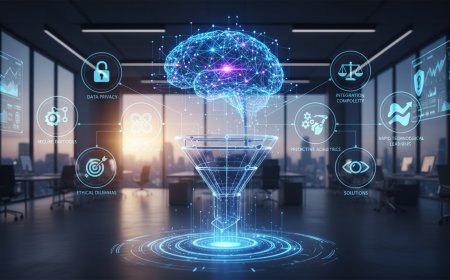
However, AI in marketing is not without its limitations. The effectiveness of AI heavily relies on the quality and quantity of data it receives. Biased data can lead to biased outcomes, potentially alienating customer segments. Ethical considerations regarding data privacy and transparency are paramount. Furthermore, AI currently lacks the nuanced emotional intelligence and creativity that human marketers bring to brand building and complex strategic thinking. While AI can generate content, the spark of human ingenuity and deep empathetic understanding remains a critical component of successful marketing campaigns. Navigating these challenges is crucial, as discussed in AI in Marketing: Top 5 Challenges & Solutions for 2026.
Who AI in Marketing Suits Best
AI in marketing is broadly applicable, but it particularly benefits organizations that:
- Handle large volumes of customer data.
- Seek to personalize customer experiences at scale.
- Aim to optimize advertising spend and improve ROI.
- Wish to automate repetitive marketing tasks to increase efficiency.
- Operate in competitive markets where data-driven insights are crucial for differentiation.
- Are looking to gain a competitive edge through advanced analytics and predictive capabilities.
Businesses of all sizes, from agile startups to large enterprises, can find value in AI marketing tools, provided they have a clear strategy and the right data infrastructure. As highlighted in AI in Marketing: The Next Big Thing for Businesses in 2026, leveraging AI is becoming essential for future growth.
What to Watch Next
The evolution of AI in marketing is ongoing. We can expect further integration of AI into more sophisticated marketing platforms, enhanced natural language processing for more human-like chatbot interactions, and greater advancements in AI-driven creative content generation. The ethical frameworks and regulatory landscapes surrounding AI and data usage will also continue to develop, influencing how AI is deployed. Marketers should stay informed about emerging AI technologies and adapt their strategies accordingly to harness the full potential of this transformative technology.
Verdict
AI is no longer a futuristic concept in marketing; it is a present-day reality that is fundamentally reshaping strategies and influencing costs. By embracing AI, businesses can unlock new levels of efficiency, personalization, and performance. While challenges related to data, ethics, and the irreplaceable value of human creativity exist, the benefits of strategic AI integration are undeniable. For companies aiming to thrive in the modern marketplace, understanding and implementing AI in marketing is not just an option, but a necessity for sustainable growth and competitive advantage.
Sources
What's Your Reaction?
 Like
0
Like
0
 Dislike
0
Dislike
0
 Love
0
Love
0
 Funny
0
Funny
0
 Angry
0
Angry
0
 Sad
0
Sad
0
 Wow
0
Wow
0