








































AI Tools Transforming Education: What's Next
Educational institutions are increasingly adopting AI tools to enhance learning and streamline operations. This article explores the evolving landscape of AI in education, its benefits, challenges, and what educators and students can expect.

AI in Education: A Paradigm Shift
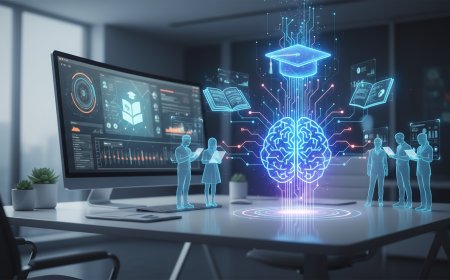
The integration of AI tools in education is no longer a futuristic concept but a present reality. Educational institutions worldwide are navigating a significant transformation, driven by the rapid advancement and adoption of artificial intelligence. This shift is reshaping traditional learning environments, offering personalized educational experiences, and introducing novel tools for both students and educators. As AI continues to evolve, understanding its implications is crucial for academic success and institutional development. This trend analysis delves into how educational institutions are adapting to AI-driven solutions, examining the benefits, challenges, and the future trajectory of AI in education.
What's Changed: The Rise of Agentic AI in Learning
The landscape of educational technology has been significantly altered by the emergence of more sophisticated AI capabilities. Recent developments highlight the introduction of agentic AI tools, which are designed to perform tasks autonomously and adapt to user needs. For instance, new agentic AI tools are emerging that can analyze complex data sets, such as those related to institutional software releases like Oracle Fusion and Workday, as indicated by coverage from Campus Technology. This signifies a move towards AI that can proactively manage and interpret critical operational information within educational settings. Furthermore, AI is increasingly being utilized to manage academic affairs, with institutions appointing specialized roles like Deans of Online Learning and Academic Affairs Data Managers, as seen with Miles College appointing Dr. Kesha James. These roles suggest a growing reliance on data-driven, AI-assisted decision-making to enhance academic programs and student support.
Why Educators and Students Should Care
The increasing presence of AI tools in education offers compelling reasons for stakeholders to pay attention. For students, AI promises more personalized learning pathways, adaptive tutoring, and access to information in novel ways. AI tools can help identify individual learning gaps and provide targeted resources, potentially leading to improved academic outcomes. For educators, AI can automate administrative tasks, freeing up time for more direct student interaction and pedagogical innovation. Tools that can analyze student performance data can offer insights into teaching effectiveness and curriculum design. As discussed in AI in Education: Upending Classrooms & Empowering Students, AI is driving personalized pathways and offering fresh challenges that require adaptation.
How AI Affects Decisions in Educational Institutions
The integration of AI tools is influencing strategic decisions within educational institutions across various levels. From curriculum development to resource allocation and student support, AI is becoming an integral part of institutional planning. The ability of AI to analyze vast amounts of data can inform decisions about program offerings, identify at-risk students, and optimize operational efficiency. For example, the analysis of software releases by agentic AI tools can help institutions make informed decisions about technology adoption and integration, ensuring that the systems supporting learning and administration are up-to-date and effective. This data-driven approach extends to academic leadership, where roles focused on data management and online learning, supported by AI insights, are becoming more prominent. Institutions are also considering the ethical implications and the need for responsible AI deployment to ensure equity and accessibility for all students. As explored in AI in Education: New Tools to Navigate the AI Reality, choosing the right AI tools requires careful consideration of institutional needs and student benefits.
Best Use Cases for AI Tools in Education
- Personalized Learning: AI algorithms can tailor educational content and pace to individual student needs, creating customized learning paths.
- Automated Grading and Feedback: AI can assist in grading assignments and providing immediate feedback, allowing educators to focus on more complex tasks.
- Administrative Support: AI can streamline administrative processes, such as scheduling, admissions, and resource management.
- Intelligent Tutoring Systems: AI-powered tutors can offer students 24/7 support and guidance on various subjects.
- Data Analysis and Insights: AI tools can analyze student performance data to identify trends, predict outcomes, and inform pedagogical strategies.
Strengths and Limitations of AI in Education
The strengths of AI tools for students and institutions are numerous, including enhanced efficiency, personalized learning experiences, and data-driven insights. AI can provide accessibility to learning resources at any time and adapt to diverse learning styles. However, limitations exist. The cost of implementation and maintenance can be a barrier for some institutions. There are also concerns about data privacy and security, as well as the potential for algorithmic bias. Over-reliance on AI could also diminish the crucial human element in education, impacting the development of critical thinking and interpersonal skills if not carefully managed. Ensuring equitable access to AI technologies is another significant challenge.
Who AI Tools in Education Suit Best
AI tools in education are beneficial for a wide range of users. AI tools for students can support those who require additional assistance, advanced learners seeking enrichment, and individuals with different learning preferences. For educators, AI serves as a powerful assistant, augmenting their teaching capabilities and reducing administrative burdens. Educational institutions, from K-12 to higher education and professional development programs, can leverage AI to improve operational efficiency, enhance student outcomes, and stay competitive in a rapidly evolving technological landscape. The adoption of AI is particularly suited for institutions looking to innovate and provide cutting-edge learning experiences.
What to Watch Next in AI in Learning
The future of AI in learning is poised for continued innovation. We can anticipate more sophisticated agentic AI systems that can independently manage complex educational workflows. Developments in natural language processing are likely to lead to more intuitive and interactive AI tutors and learning assistants. Furthermore, the focus will likely shift towards ensuring ethical AI development and deployment, with greater emphasis on transparency, fairness, and human oversight. As AI continues to integrate into the fabric of education, institutions will need to foster a culture of continuous learning and adaptation to harness its full potential responsibly. The ongoing evolution of AI in personal finance, as discussed in AI Personal Finance Tools 2026: Trends to Watch, offers a glimpse into how AI is becoming embedded in various sectors, including education.
Verdict: Embracing the AI Evolution
The integration of AI tools in education represents a significant opportunity to enhance learning, improve efficiency, and prepare students for a future increasingly shaped by technology. While challenges related to cost, ethics, and implementation remain, the benefits of personalized learning, automated support, and data-driven insights are undeniable. Educational institutions that proactively adapt and strategically implement AI solutions are likely to lead the way in providing effective and engaging educational experiences for years to come.
Sources
What's Your Reaction?
 Like
0
Like
0
 Dislike
0
Dislike
0
 Love
0
Love
0
 Funny
0
Funny
0
 Angry
0
Angry
0
 Sad
0
Sad
0
 Wow
0
Wow
0