


































AI Agents' Rise Brings New Privacy Trade-offs to Workplaces
As AI agents become increasingly prevalent in workplaces, employees and employers alike must navigate new privacy trade-offs. This trend explainer outlines the shifts, the impacts, and how to stay informed.
The Ascendance of AI Agents in the Modern Workplace
Artificial intelligence (AI) agents are no longer a futuristic concept; they are rapidly becoming integral components of the modern workplace. These sophisticated software programs are designed to automate tasks, analyze data, and even make decisions, promising significant boosts in productivity and efficiency. From managing schedules and drafting communications to assisting with complex problem-solving, AI agents are transforming how businesses operate and employees perform their duties. However, this rapid integration is not without its challenges. As these intelligent tools become more embedded in our daily work, they introduce a complex web of new privacy trade-offs that both employees and employers must understand and address.
Understanding the New Privacy Landscape
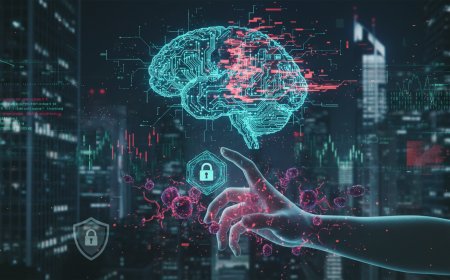
The core of the privacy concern lies in the data AI agents collect and process. To function effectively, many AI agents require access to vast amounts of information, including employee communications, project details, performance metrics, and even personal work habits. This can create a situation where employee activity is monitored more closely than ever before.
Source 3, "AI in the workplace raises new privacy trade-offs," highlights that the very capabilities that make AI agents so powerful – their ability to learn, adapt, and perform tasks autonomously – also present potential risks to individual privacy. For instance, an AI agent designed to optimize team workflows might analyze individual employee performance data, raising questions about how this data is used, stored, and protected. This level of data collection can feel intrusive, blurring the lines between work-related oversight and personal privacy.
This shift is particularly notable as AI agents move beyond simple task automation to more complex roles. Unlike traditional software that performs predefined functions, AI agents can learn and evolve, potentially accessing and interpreting data in ways that were not initially anticipated. This dynamic nature makes it challenging to establish static privacy policies.
Key Privacy Trade-offs and Their Impacts
The introduction of AI agents into the workplace necessitates a re-evaluation of the balance between organizational efficiency and employee privacy. Here are some of the key trade-offs:
- Enhanced Productivity vs. Constant Monitoring: AI agents can significantly streamline workflows, automate repetitive tasks, and provide real-time insights, leading to greater productivity. However, achieving these benefits often involves the AI agent monitoring employee activities, communications, and performance data. This can lead to a feeling of constant surveillance, potentially impacting employee morale and trust.
- Data-Driven Insights vs. Personal Data Security: AI agents excel at processing large datasets to uncover trends and inform strategic decisions. This can lead to better business outcomes. Yet, the data processed often includes sensitive employee information. Ensuring the security and ethical use of this data is paramount to prevent breaches or misuse.
- Personalized Assistance vs. Behavioral Profiling: Some AI agents are designed to offer personalized support, such as suggesting relevant resources or optimizing individual work schedules. While beneficial, this personalization can inadvertently lead to the creation of detailed behavioral profiles of employees, raising concerns about how these profiles might be used in performance evaluations or other employment decisions.
- Automation of Tasks vs. Job Security and Skill Development: While not strictly a privacy issue, the automation capabilities of AI agents can lead to concerns about job displacement. This, coupled with the potential for AI to handle tasks previously requiring human judgment, can create anxiety about career progression and the need for continuous skill adaptation. Understanding how AI agents augment rather than replace human roles is key.
Navigating the Evolving Landscape: Strategies for Workplaces
As AI agents become more common, organizations need proactive strategies to manage the associated privacy risks and foster a trusting work environment. This includes:
1. Transparent Policies and Communication
It is crucial for organizations to develop clear, comprehensive, and transparent policies regarding the use of AI agents. Employees should be fully informed about:
- Which AI agents are being used.
- What data these agents collect.
- How the data is used, stored, and protected.
- The purpose of the data collection (e.g., productivity enhancement, security, workflow optimization).
Open communication channels should be established to address employee concerns and questions. As highlighted in AI Agents Transform Workplaces: Capcom's Stance & Slack's New Tools, understanding how leading companies approach AI integration can provide valuable insights into best practices.
2. Robust Data Security Measures
Implementing strong cybersecurity protocols is non-negotiable. This includes:
- Data encryption (both in transit and at rest).
- Access controls and regular security audits.
- Anonymization or pseudonymization of data where possible.
- Compliance with relevant data protection regulations (e.g., GDPR, CCPA).
The potential for AI agents to create new cybersecurity vulnerabilities, as discussed in AI Agents Overtake Cybersecurity: The New Workplace Challenge, underscores the need for enhanced security frameworks.
3. Employee Training and Education
Educating employees on how AI agents function, the benefits they offer, and their rights regarding data privacy is essential. Training should also cover how to interact with AI agents effectively and securely. This can help demystify the technology and reduce apprehension.
4. Ethical AI Implementation
Organizations must prioritize ethical considerations in the deployment of AI agents. This involves:
- Ensuring AI systems are fair and unbiased.
- Avoiding discriminatory practices based on AI-generated insights.
- Establishing clear guidelines for AI decision-making, especially in sensitive areas like performance reviews or hiring.
The development of effective onboarding plans for AI agents, as detailed in Creating an Effective Onboarding Plan for AI Agents: A Comprehensive Guide, can also incorporate ethical guidelines from the outset.
5. Regular Review and Adaptation
The field of AI is constantly evolving. Organizations must commit to regularly reviewing and updating their AI usage policies, security measures, and training programs to keep pace with technological advancements and emerging privacy concerns.
The Future of Work: A Collaborative Approach
The integration of AI agents into the workplace represents a significant shift, offering immense potential for innovation and efficiency. However, it also demands a careful and considered approach to privacy. By prioritizing transparency, robust security, ethical deployment, and continuous education, businesses can harness the power of AI agents while safeguarding employee privacy. This collaborative effort between employers and employees will be key to navigating the evolving landscape of work and ensuring that AI serves as a tool for progress without compromising fundamental rights.
Sources
What's Your Reaction?
 Like
0
Like
0
 Dislike
0
Dislike
0
 Love
0
Love
0
 Funny
0
Funny
0
 Angry
0
Angry
0
 Sad
0
Sad
0
 Wow
0
Wow
0