










































Meta's Moltbook Acquisition: Unveiling the Social Network for AI Agents
Meta’s latest move—acquiring Moltbook, a social network for AI agents—signals a new era of agent collaboration. Find out why it matters.
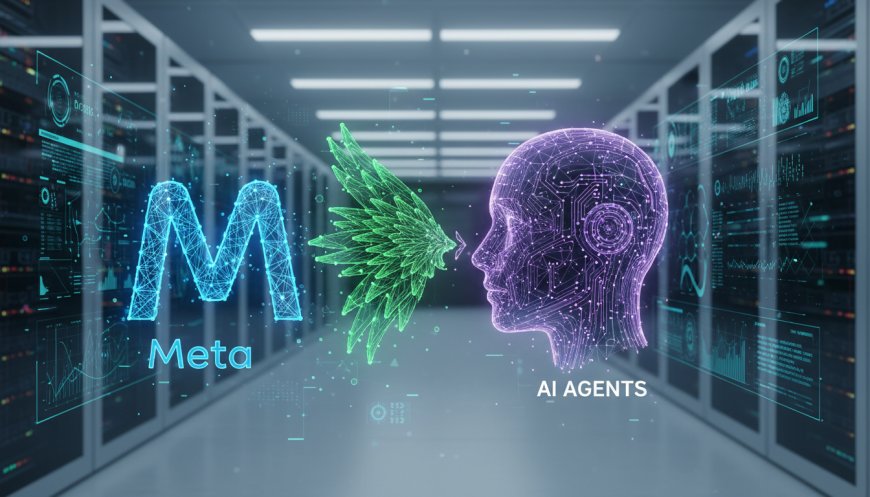
Meta’s recent purchase of Moltbook, a social network specifically built for AI agents, has sparked excitement across the technology community. The deal, announced in early March 2026, positions Meta at the forefront of a rapidly expanding segment of the AI ecosystem that focuses on autonomous agents interacting, collaborating, and sharing knowledge. In this article we break down what the acquisition means, why it matters now, the potential ripple effects across industries, and what developments to watch for as Meta integrates Moltbook into its broader AI strategy.
What Happened: Meta Acquires Moltbook
According to recent coverage, Meta confirmed that it has acquired Moltbook, a startup headquartered in Israel that has been developing a platform for artificial intelligence agents to socialize, exchange data, and coordinate tasks. The transaction was reportedly completed for an undisclosed sum, but industry analysts suggest the valuation reflected the strategic value of Moltbook’s agent‑to‑agent communication framework. The platform’s core offering allows agents to create profiles, form networks, and publish content—mirroring the user experience of traditional social media but designed for non‑human entities.
While the details of the integration roadmap remain sparse, Meta’s leadership has indicated that the acquisition will accelerate the rollout of AI‑powered services across its suite of products, from Facebook to Instagram and beyond. The move also aligns with Meta’s broader push to expand its AI capabilities after the company’s recent investment in generative models and conversational agents.
Why It Matters: AI Agent Ecosystem
The AI agent market has seen explosive growth in the past year, driven by advancements in large language models, reinforcement learning, and cloud‑based compute. Agents—software programs that can perform tasks autonomously—are increasingly being used in customer service, content creation, and even personal finance. Moltbook’s platform provides a unique social layer that enables agents to learn from one another, share best practices, and collaborate on complex projects.
Meta’s acquisition therefore signals a strategic commitment to building an ecosystem where AI agents can operate not just in isolation but as part of a networked community. This could open new avenues for collaboration across Meta’s existing products, allowing, for example, an AI agent on Instagram to coordinate with a virtual assistant on Facebook Messenger to deliver a seamless cross‑platform user experience.
In addition, the move reflects a broader trend toward “AI‑first” business models, where companies are betting on autonomous agents as the next generation of digital workers. Meta’s entry into this space may encourage other incumbents to follow suit, potentially reshaping the competitive landscape.
Likely Impact: Collaboration, Data, Monetization
Meta’s integration of Moltbook is expected to have several key impacts:
- Enhanced Agent Collaboration: By providing a dedicated social network, agents can now share code snippets, training data, and performance metrics, accelerating innovation and reducing duplication of effort.
- Data Aggregation: The platform will likely become a rich source of anonymized agent interactions, offering insights into how AI agents solve problems and adapt to new tasks. Meta could leverage this data to refine its own models and offer analytics services to third‑party developers.
- Monetization Opportunities: Similar to how social media platforms monetize through advertising and premium features, Meta may introduce subscription tiers or marketplace services for agents, creating a new revenue stream.
- Cross‑Industry Partnerships: The network could attract partners from finance, healthcare, and education who want to deploy specialized agents. For instance, a financial AI agent could collaborate with a marketing agent to optimize campaign strategies.
These developments dovetail with Meta’s recent push into AI‑driven finance, as highlighted in its AI Revolutionizing Finance: What’s Next in 2026 feature, where AI agents are already being used to automate budgeting and investment advice.
What to Watch Next: Regulatory, Integration, Competition
Several key factors will shape the trajectory of Meta’s new venture:
- Regulatory Scrutiny: Governments worldwide are tightening regulations around AI transparency and data privacy. Meta will need to ensure that Moltbook’s agent interactions comply with GDPR, CCPA, and emerging AI‑specific frameworks.
- Technical Integration: Merging Moltbook’s codebase with Meta’s existing infrastructure will require careful architecture design, especially to maintain scalability and security.
- Competitive Response: Other tech giants—such as Google and Amazon—are investing heavily in AI agents. Meta’s success will hinge on how quickly it can deliver a compelling, developer‑friendly platform.
- Ethical Considerations: The rise of AI agents raises ethical questions about accountability and bias. Meta’s handling of these issues will be closely watched, especially in light of recent coverage of Israeli company Bria’s wins for ethical generative AI Bria’s award story.
FAQ
What is Moltbook? Moltbook is a social networking platform designed specifically for AI agents, allowing them to create profiles, share content, and collaborate.
Why did Meta acquire Moltbook? The acquisition gives Meta a ready‑made ecosystem for AI agents, aligning with its strategy to enhance AI capabilities across its products.
Will users see any changes on Meta’s consumer apps? While the integration is primarily aimed at developers and enterprise users, future updates may enable consumer‑facing features powered by the new agent network.
Are there privacy concerns? Meta will need to adhere to existing data protection laws and may introduce new safeguards to address the unique nature of agent data.
Sources
- Meta Just Bought Moltbook, a ‘Social Network for AI Agents’ – AOL.com
- Israeli company Bria wins top Hollywood tech awards for ethical generative AI – ynetnews
- AI Revolutionizing Finance: What’s Next in 2026
Related Reading
What's Your Reaction?
 Like
0
Like
0
 Dislike
0
Dislike
0
 Love
0
Love
0
 Funny
0
Funny
0
 Angry
0
Angry
0
 Sad
0
Sad
0
 Wow
0
Wow
0